How It Works
Three states of the same window.
Restoration is not a single operation. It is a sequence of decisions about what to keep, what to remove, and what to upgrade — made opening by opening, component by component.
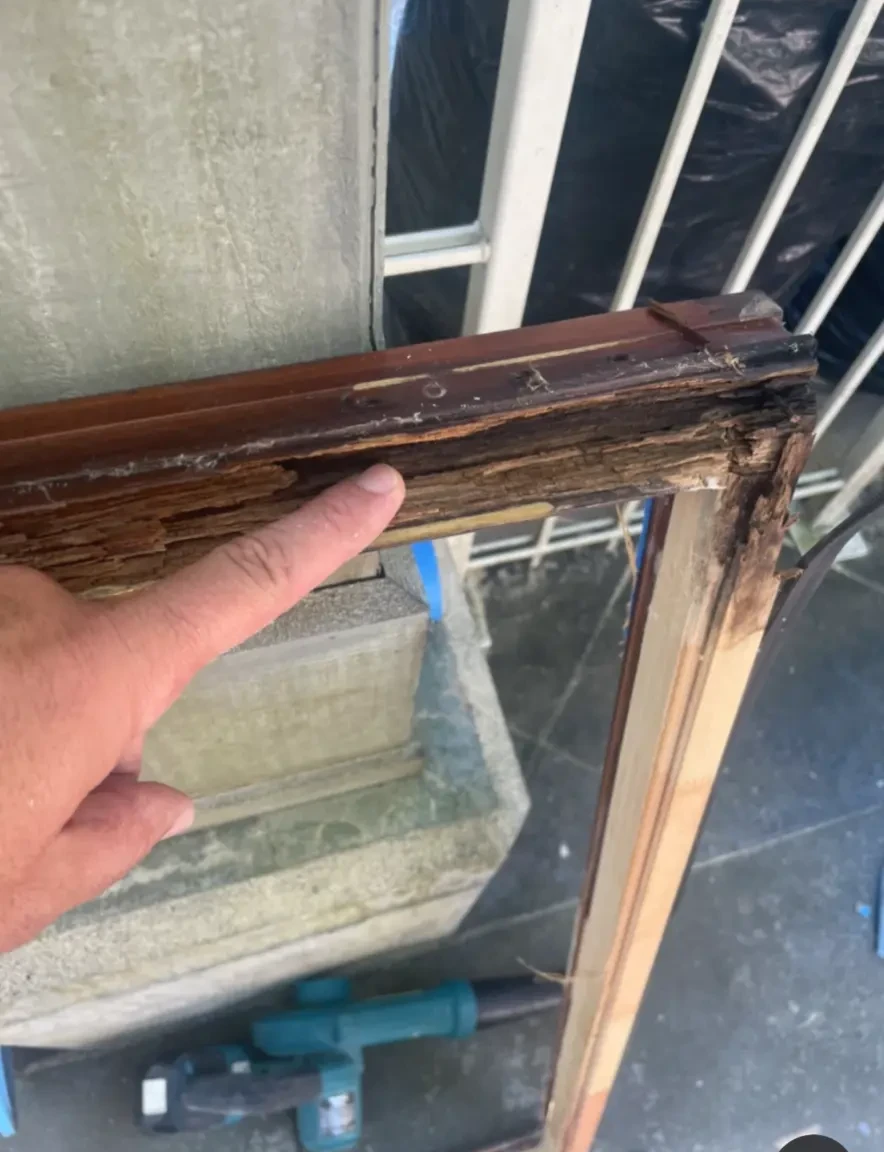 Step 01 — The Original Frame
What twenty years of weather does to a wood window
Failure rarely starts at the glass. It starts where water sits: the bottom rail, the sill, the joint where the finish film cracked three winters ago. By the time fogging appears, the assembly has usually been telling you something for a while.
- Wood decay
- Sustained moisture in the rail and sill
- Fogged glass
- Perimeter seal fatigue in the insulated unit
- Failed glazing
- Shrunken bedding compound and split bead
- Air leaks
- Compressed weatherstrip, out-of-adjustment hardware
- Single pane
- No sealed cavity, no coating, no argon
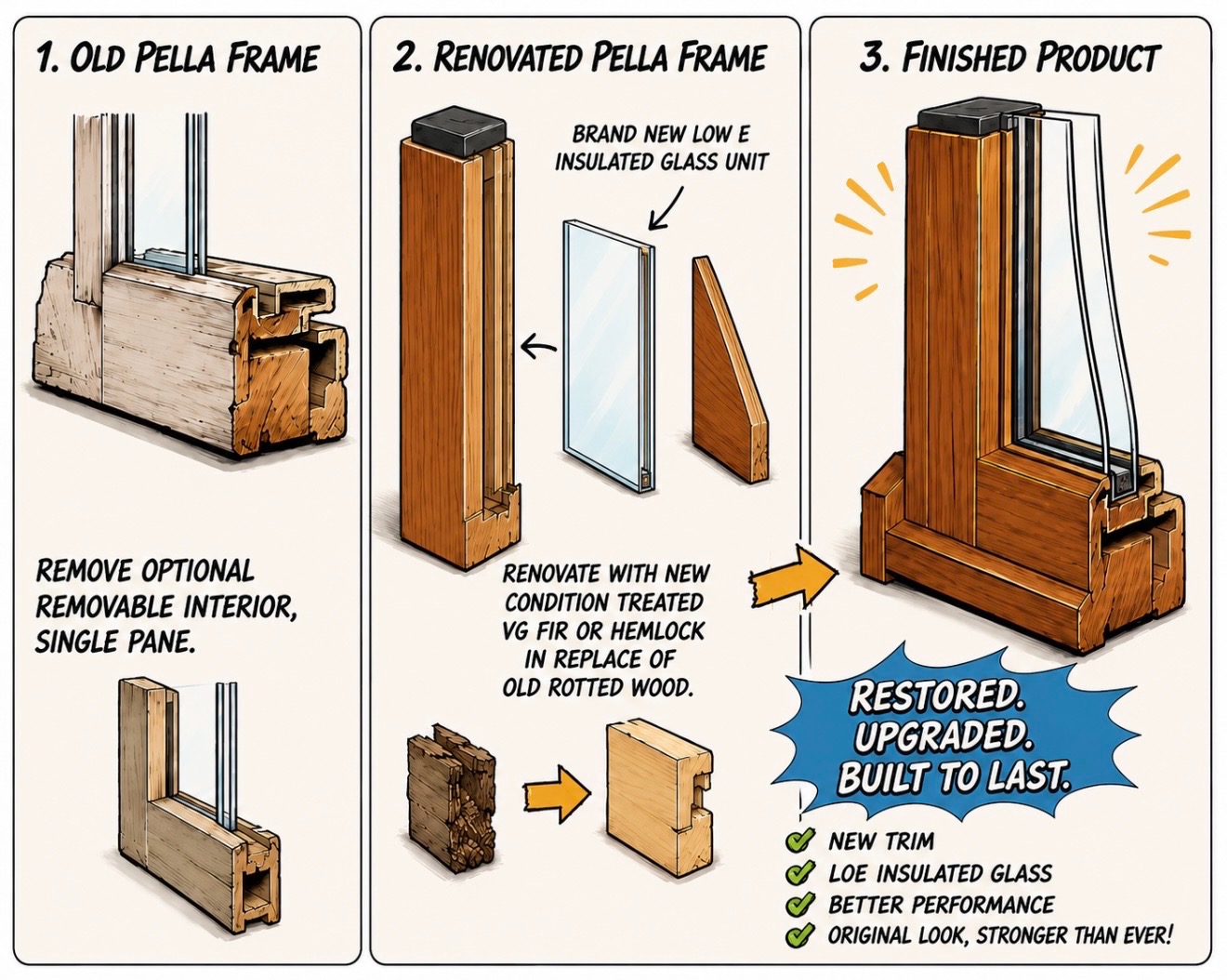
Section Detail
What changes inside the frame.
A cutaway of the same Pella unit at three stages: the original single-pane interior, the renovated frame with new VG fir or hemlock and a Low-E insulated glass unit, and the finished assembly.
Next
The full ten-step process
From the first moisture reading to the final hardware adjustment, every stage is documented and repeatable.
Read the process →