Process
Ten steps, documented every time.
Restoration quality is a function of sequence and discipline, not heroics. This is the order the work happens in, and why each stage exists.
- 01
Assessment
Every opening is documented: moisture readings, glass condition, hardware function, sill slope, and finish integrity. Nothing is replaced before it is measured.
- 02
Removal & Protection
Sash are removed and catalogued by opening. Interiors are masked and protected; temporary glazing keeps the building secure and weather-tight.
- 03
Decay Removal
Compromised wood is cut back to sound substrate. Early-stage decay is consolidated; structural loss is removed entirely.
- 04
Milling
Replacement components are milled from matched species with grain orientation and profile knives that reproduce the original section.
- 05
Reassembly
Joints are re-glued and clamped square, then mechanically reinforced where original joinery has lost integrity.
- 06
Re-Glazing
New argon-filled Low-E insulated units are set on fresh blocks with a continuous bed and correctly sized bite.
- 07
Wood Treatment
Borate treatment and end-grain sealing on all six sides, including the surfaces nobody sees once the sash is hung.
- 08
Weather Sealing
New compression seals and a rebuilt drainage path restore the air and water performance the assembly had when new.
- 09
Prime & Finish
A breathable coating system, applied in controlled conditions, with the finish schedule documented for future maintenance.
- 10
Reinstallation
Sash are rehung to the original openings, hardware adjusted for even compression, and each unit is operated and verified.
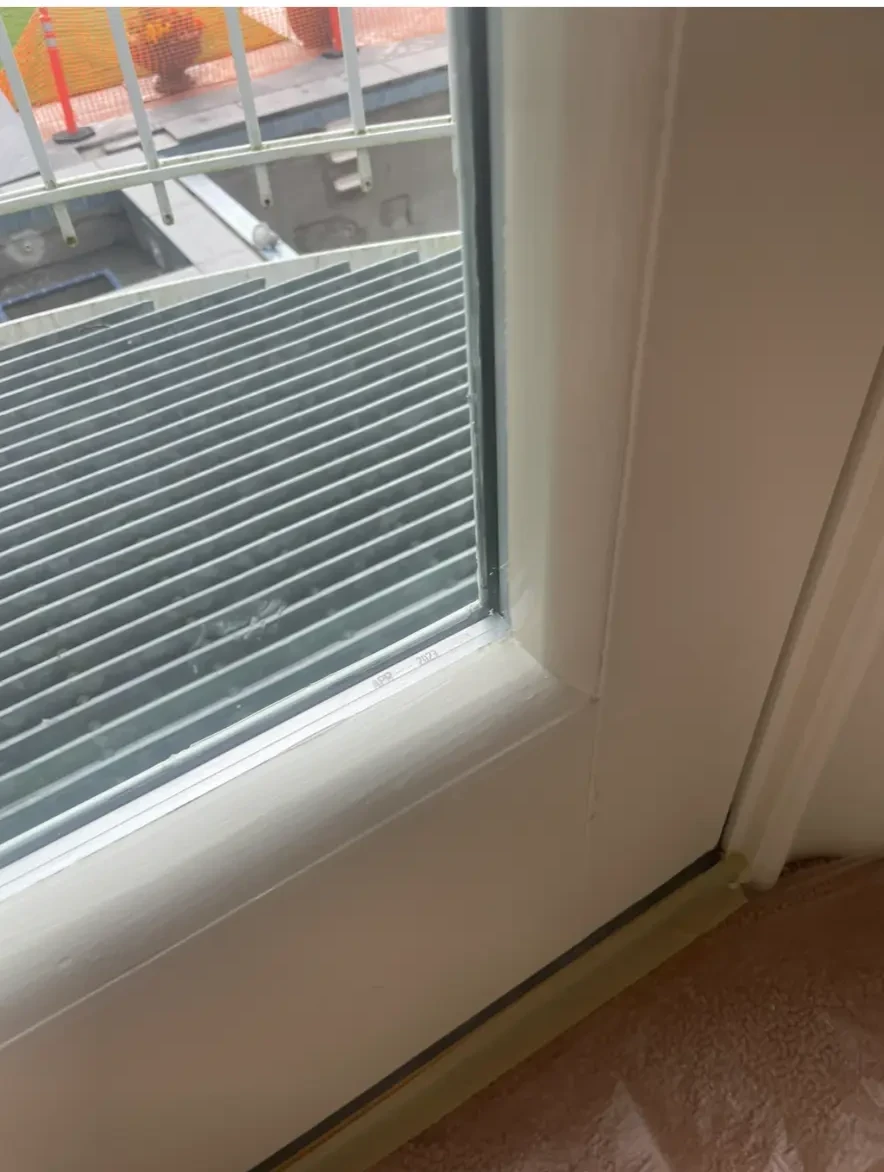
A restored jamb and sill. The measure of good restoration is that nothing about it announces itself.